

The Link Between Heart Rate Variability and Low Back Pain
A potential biomarker for chronic pain treatment success

Heart rate variability—the variation in time between consecutive heartbeats—has emerged as a significant biomarker for understanding chronic low back pain. The evidence is clear: patients with chronic low back pain consistently demonstrate reduced HRV compared to healthy controls, reflecting dysfunction in the autonomic nervous system.[1][2]
What is Heart Rate Variability?
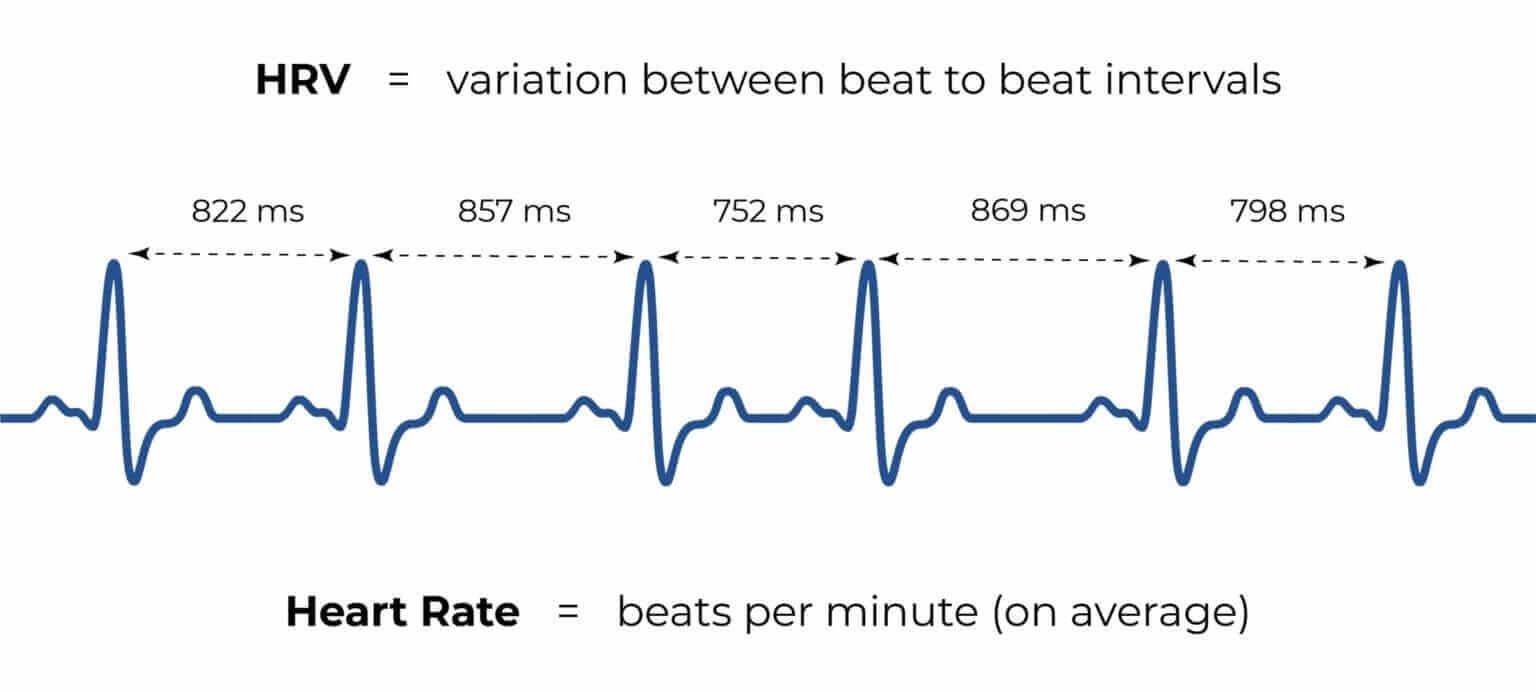
Heart rate variability (HRV) is the physiological variation in time intervals between consecutive heartbeats, measured in milliseconds.[3][4]Rather than beating like a metronome, a healthy heart exhibits natural fluctuations in rhythm—and these fluctuations reveal the activity of the autonomic nervous system.
HRV reflects the continuous interplay between the sympathetic (fight-or-flight) and parasympathetic (rest-and-digest) branches of the nervous system as they modulate the heart’s sinus node.[5]Higher HRV generally indicates healthy autonomic function and cardiovascular resilience, while reduced HRV has been associated with increased mortality risk in conditions such as post-myocardial infarction and heart failure.[5][6]
Common measures include time-domain metrics like SDNN (standard deviation of RR intervals) and RMSSD (root mean square of successive differences), as well as frequency-domain analysis examining high-frequency (parasympathetic) and low-frequency (mixed sympathetic/parasympathetic) components.[3][4]HRV is influenced by age, stress, sleep, exercise, medications, and time of day—all of which must be considered when interpreting measurements.[7][5]
Autonomic Dysfunction in Chronic Pain
Meta-analytic evidence from 26 moderate-to-high quality studies reveals a consistent, moderate-to-large effect of decreased high-frequency HRV in chronic pain, indicating reduced parasympathetic activation.[1]This autonomic imbalance manifests as increased sympathetic dominance and decreased parasympathetic modulation. A 2025 comparative study found that patients with chronic low back pain showed
